
CUMIN SEEDS
/ Chinese / Arabic / Korean /
Nuragri-Expo - Natural as Now and Future
Cumin (Cuminum cyminum) is a small annual plant of the parsley family, widely cultivated in the Mediterranean region of Europe and in India. Primary cultivation of cumin is in Europe, Asia, the Middle East, and North Africa with India and Iran as the largest cumin exporters. The valued portion of the plant is the dried fruit called cumin seed, which is esteemed as a condiment. Cumin was known to the Egyptians 5,000 years ago and it was found in the pyramids. In ancient times cumin was a symbol of greed and meanness. Curiously, by the Middle Ages it was regarded as a symbol of faithfulness.
Aroma and flavour
The odour and flavour of cumin is derived largely from the essential oil, which contains cumaldehyde or cuminic aldehyde as the main constituent. Other ingredients of the oil are dihydrocuminaldehyde, dl-pinene, d-pinene, para-cymene, dipentene, and cuminyl alcohol. The dried seed of cumin has 2.5 to 5 percent essential oil on a dry weight basis and is obtained by steam distillation.
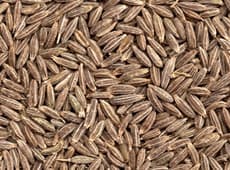
Cumin is the dried, white fruit with greyish brown colour of a small slender annual herb. The surface of the fruit has 5 primary ridges, alternatively has 4 less distinct secondary ridges bearing numerous short hairs. The plant is 15 to 50 cm high. The aromatic seed like fruit is elongated, ovoid, 3 to 6 mm long, slightly bitter and has a warm flavour.
Various origin of Cumin Seeds
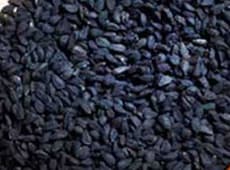
Iranian: Iranian cumin comes from the Khorasan province, and is mostly black seed cumin. It is also known as the caraway plant.
Indian: India produces and consumes the most cumin in the world, and is similar in taste and aroma to Iranian cumin. Indian cumin has an essential oil content, between 3 and 5 percent, and is brown in color.
Middle Eastern: Middle Eastern cumin, originating in Pakistan, Syria and Turkey, differs in flavor and aroma from Indian and Iranian cumin. It has an essential oil content between 3 and 5 percent.
White and Black Cumin: Aside from regional differences, cumin seeds come in two varieties: white and black. Most cuisines use white cumin seeds, but black cumin seeds are found in Persian dishes and are sweeter in aroma.
Crop Season
Cumin Seeds is grown as a Rabi crop in India and it is also grown well in sub-tropical climate too, best suited for sandy soil. Generally Cumin Seeds crop takes about 120-125 days to reach maturity level. Crop becomes ready to harvest, when plants turn yellowish brown. Harvesting of Cumin Seeds is done in the month of February-March. It requires less water and more cold for its better growth with ideal temperature of 20 to 30 degree.
Common Packing For Container Shipment
| Products | Packing | Container |
|---|---|---|
| Cumin Seeds | 50kg PP Bags | 260 Bags in 20'FCL / 500 Bags in 40'FCL |
Origin of Cumin Seeds with production
Major producing regions: India, Iran, Turkey, Morocco, Egypt, Syria, Mexico, China
Specification
| Properties | Values & Limits |
|---|---|
| Type | Machine cleaned / Sortexed/Extra Bold |
| Purity | 99% / 98% / 99.50% |
| Total Ash | Max. 9.50% |
| Acid Insoluble Ash | Max. 1.75% |
| Flavour | Aromatic with a penetrating flavour |
| Moisture | Max. 10% |
| Volatile oil | Min 2.00 ml/100 gms |
| Salmonella | Absent/25 gms |
Nutrition Facts
Serving Size: 100gm
Amounts per servings
*Percent Daily Values are based on a 2,000 Calorie diet.
Facts on Cumin Seeds
- Cumin is a flowering plant in the family Apiaceous, native from the east Mediterranean to South Asia. Its seeds (each one contained within a fruit, which is dried) are used in the cuisines of many different cultures, in both whole and ground form. It also has many uses as a traditional medicinal plant.
- Cumin is the dried seed of the herb Cuminum cyminum, a member of the parsley family. The cumin plant grows to 30-50 cm (12-20 in) tall and is harvested by hand. Cumin seeds have eight ridges with oil canals.
- Cumin seeds are essential flavors for different cuisines and wonderful spice to add different flavors in food items.
- Cumin seeds are usually preferred at the locations where people love to eat spicy food items. This is taken as essential ingredient for curry powders and chicken dishes.
- In Middle East region, cumin seeds are usually preferred for fish dishes.
- Cumin seeds can be used as medicinal herb to boost up your overall health and stamina.
- It is used as a flavoring agent to add distinct flavor to your dishes.
- Cumin seeds are chemical free and help in treating yellow jaundice and other health problems.